×

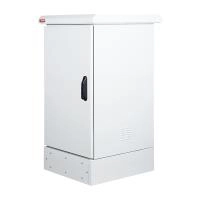
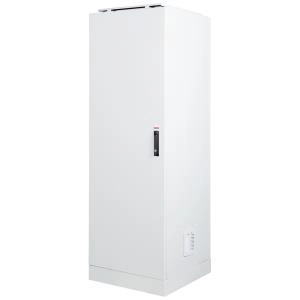
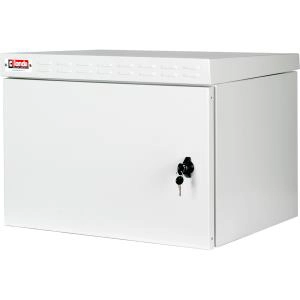
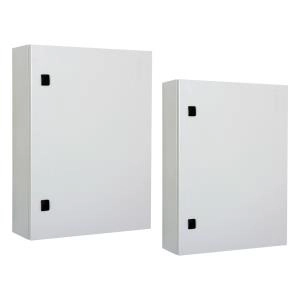
LANDE Outdoor Cabinets: World-Class Protection for Critical Infrastructure
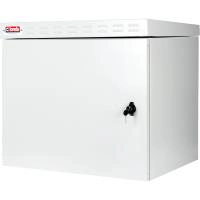
LANDE Rack Cabinets delivers outdoor enclosure solutions designed for demanding infrastructure environments, from urban surveillance networks to ports, renewable energy sites, and industrial facilities. With more than 25 years of experience presented in the source text, the product range is positioned around broad ingress protection and corrosion-resistance options for different operating conditions.
The core value proposition is straightforward: match the cabinet structure, sealing level, and material specification to the environmental risk level rather than using a one-size-fits-all enclosure. For website use, this makes the message more relevant for buyers comparing durability, service life, and total cost of ownership across multiple applications.
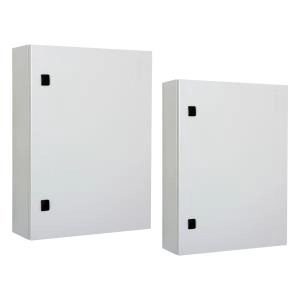
The source article presents LANDE solutions across a protection range from IP55 to IP68, each aligned to different field conditions. IP55 models are described for semi-open environments such as factories and warehouses, while IP65-IP66 models are framed for fully exposed outdoor use including urban networks and traffic control systems.
IP67 cabinets are positioned for locations with elevated water exposure risk, such as riverbanks, dams, and environmental monitoring points, where short-term immersion resistance is important. IP68 cabinets are presented for marine and continuously high-humidity environments, including ports and wind energy installations, where long-term sealing performance becomes critical.
The article structures material selection according to corrosion classes from C1 to C5 under ISO 12944-2. Painted steel is associated with clean indoor settings, galvanized steel with low-corrosion rural conditions, AISI 304 stainless steel with medium-corrosion urban environments, AISI 316L stainless steel with high-corrosion coastal areas, and Duplex 2205 stainless steel with very high-corrosion salt-laden environments.
This framework helps specifiers connect environment, material, and expected service life in a more decision-oriented way. The source text also emphasizes optimized coating technologies, UV resistance, and polyester-based finishes as part of long-term outdoor durability.
Corrosion Class | Recommended Material | Typical Environments | Indicative Service Life |
C1 | Painted steel | Indoor offices, clean interiors | 5-10 years |
C2 | Galvanized steel | Rural and agricultural areas | 10-15 years |
C3 | AISI 304 stainless steel | City centers such as Istanbul and Ankara | 15-20 years |
C4 | AISI 316L stainless steel | Ports, coastal regions, Mediterranean conditions | 20-25 years |
C5 | Duplex 2205 stainless steel | Saltwater and severe marine exposure | 25-30 years |
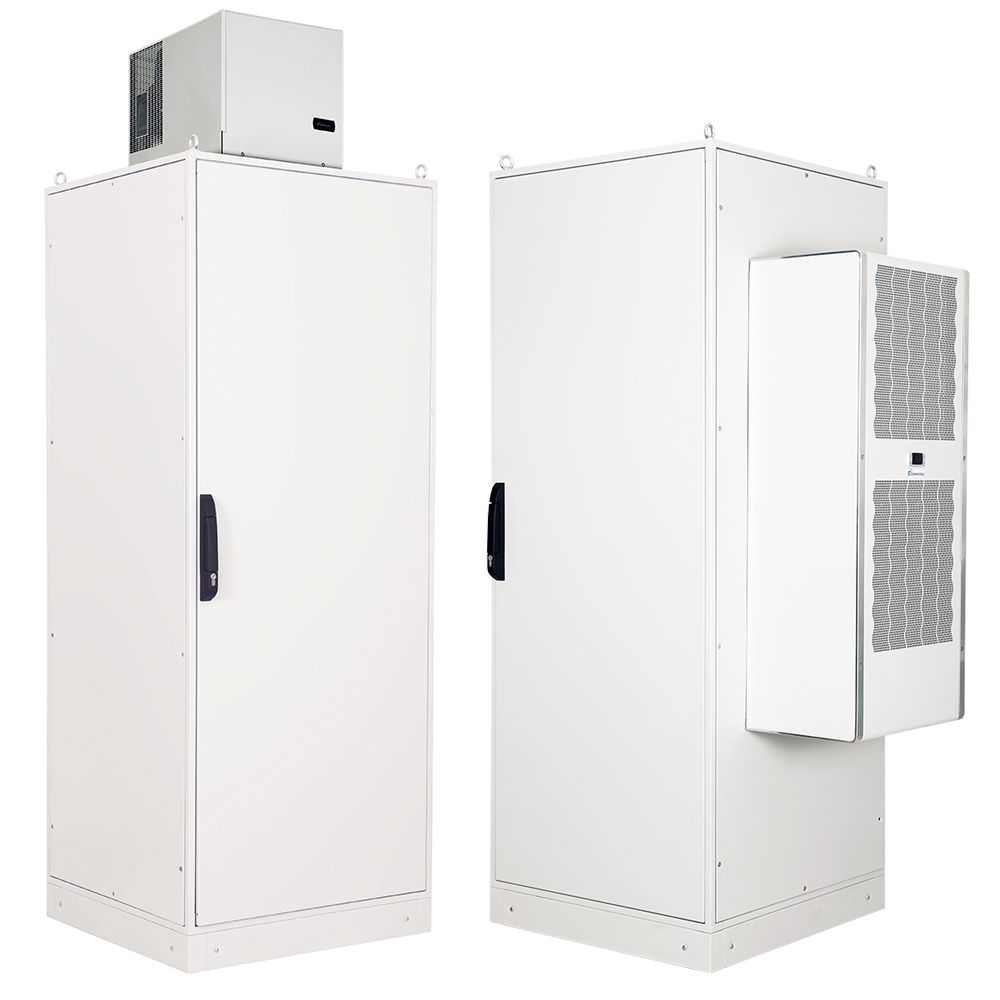
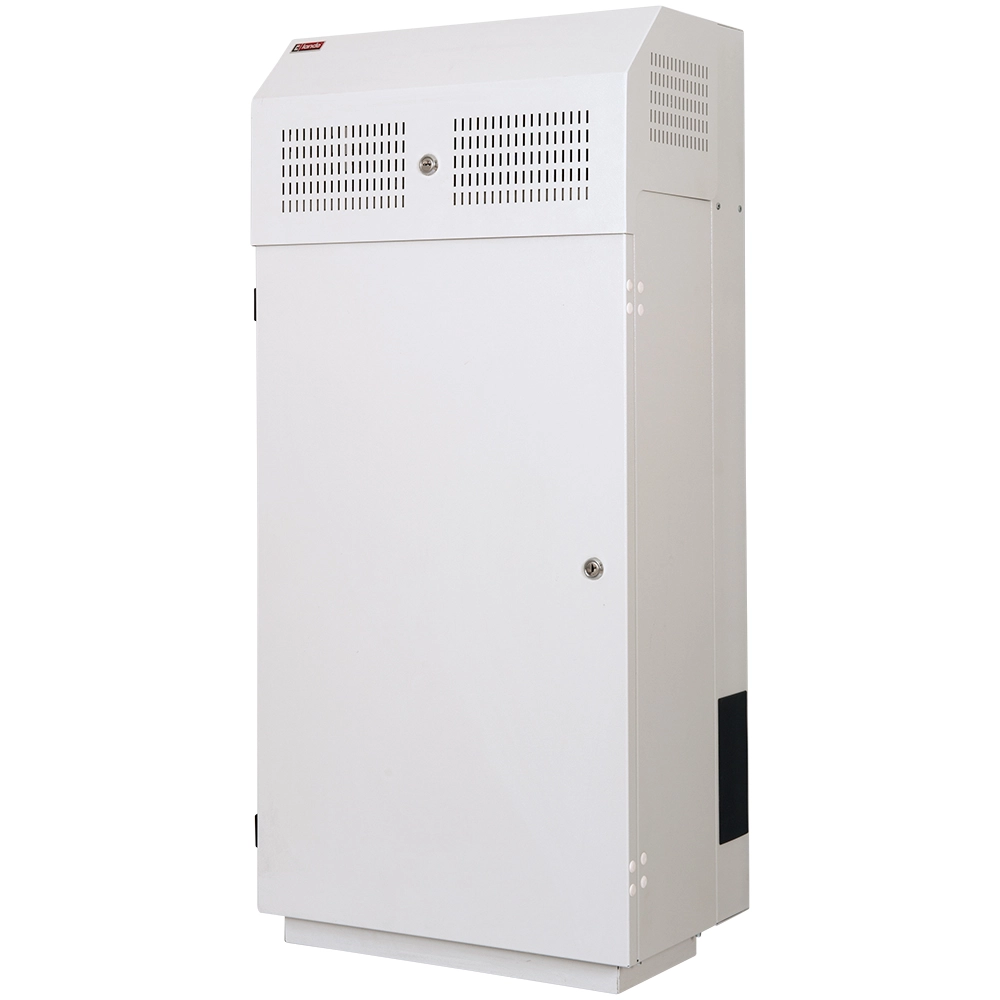
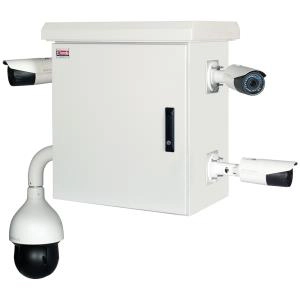
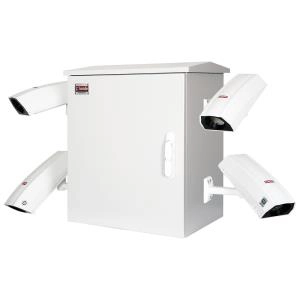
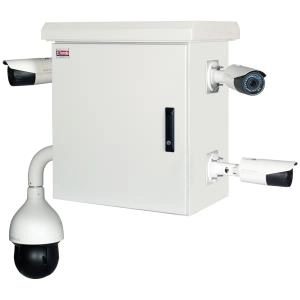
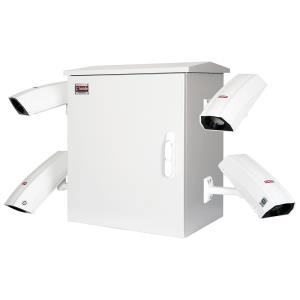
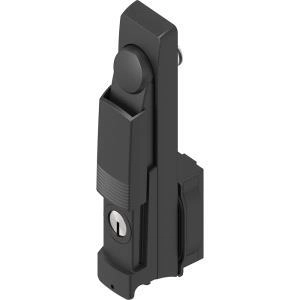
The source text highlights LANDE cabinets for MOBESE, CCTV, and traffic control infrastructure used in dense urban environments. Key features described include three-point locking, anti-vandal door construction, thermal management, and multi-directional water protection for reliable operation in exposed public areas.
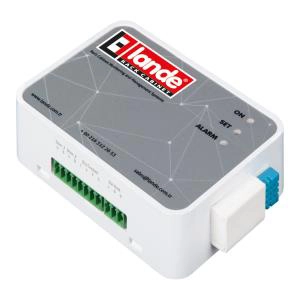
For airport, customs, border, and public-sector deployments, the article also emphasizes modular installation, wide operating temperature capability, and remote environmental monitoring through sensor integration. This makes the content suitable for a website audience looking for practical deployment benefits rather than only technical ratings.
Ports and Marine Infrastructure
For high-salinity environments, the article positions IP68 cabinets built with AISI 316L stainless steel for ports and customs infrastructure. The text specifically points to corrosion resistance, pressure-balancing systems, and redundant cooling approaches for operations that require continuous service availability.
Marine applications are presented as one of the clearest examples of why enclosure material selection matters. In web format, this section works well because it links a severe environmental challenge directly to a tailored engineering response.
The article also presents LANDE solutions for wind turbines, solar energy plants, textile factories, chemical facilities, food processing, and water treatment operations. Across these use cases, the recurring themes are resistance to temperature extremes, dust, humidity, UV exposure, and corrosive atmospheres.
The source content further stresses modular cooling, filtration, sensor-based monitoring, and cleanable designs that support uptime and simplified maintenance. That gives the webpage a strong cross-sector narrative: one platform, configured differently for each field environment.
The article describes a dual-material strategy in which the outer shell is selected according to the corrosion category while the internal structure is optimized for thermal performance and mechanical integrity. This positioning supports a balance between durability, cost control, and long-term lifecycle performance.
A second recurring advantage is energy-efficient cooling through a passive-plus-active approach, where natural convection handles a significant share of heat dissipation and active cooling is used only when thermal loads require it. The source also presents modular cabinet sizing, configurable cooling options, sealed connectors, and integrated monitoring for temperature, humidity, and door status.
The source article lists compliance or alignment with IEC 60529 for IP ratings, ISO 12944-2 for corrosion categories, EN 61587-1 for mechanical structures and cabinet dimensions, UL Type 4/4X, NEMA 3R, and CE requirements. It also states that manufacturing follows ISO 9001:2015 and that materials and welding are tested against ASTM-oriented criteria, with a five-year warranty for many models.
For web publication, this section strengthens trust because it translates product claims into recognizable international standards. Buyers in infrastructure, telecom, energy, and public-sector procurement often scan this type of information early in the evaluation process.
The article argues that although the initial purchase price may be higher than competing cabinets, lifecycle cost is lower over a 20-year period because of reduced maintenance, lower failure rates, and longer service life. The text frames this as a total cost of ownership advantage rather than a lowest-price purchase decision.
Operationally, the source emphasizes redundancy options, predictive maintenance supported by IoT sensors, 24/7 technical support in Türkiye, and long-term spare-parts availability. For a website audience, this commercial framing is effective because it connects product engineering to business continuity and infrastructure stability.
Metric | Standard Competitor Cabinet | LANDE Cabinet |
Initial purchase level | 100% | 120% |
Maintenance in first 5 years | 10% annually | 2% annually |
5-10 year period | Parts replacement required | Minimal intervention |
10-20 year period | Failure rate above 5% per year | Around 0.5% per year |
20-year total cost | 100% | 60% |
Outdoor cabinets are long-term infrastructure assets, and the right specification can directly affect uptime, maintenance needs, and system reliability over decades. LANDE is presented in the source text as a manufacturer focused on broad environmental protection, international standards, and tailored configurations for surveillance, transport, energy, marine, and industrial applications.
For organizations seeking a solution range from IP55 to IP68 and corrosion protection from C1 to C5, the article positions LANDE as a durable and strategically safer choice for mission-critical outdoor deployments.
03.02.2026


LANDE © 2026 All Rights Reserved.

0
)